Store owners
Founders with little audit experience. They want to know what works, what needs attention, and which change to make on which page.
Turning a store audit into evidence, clear findings and an action plan.
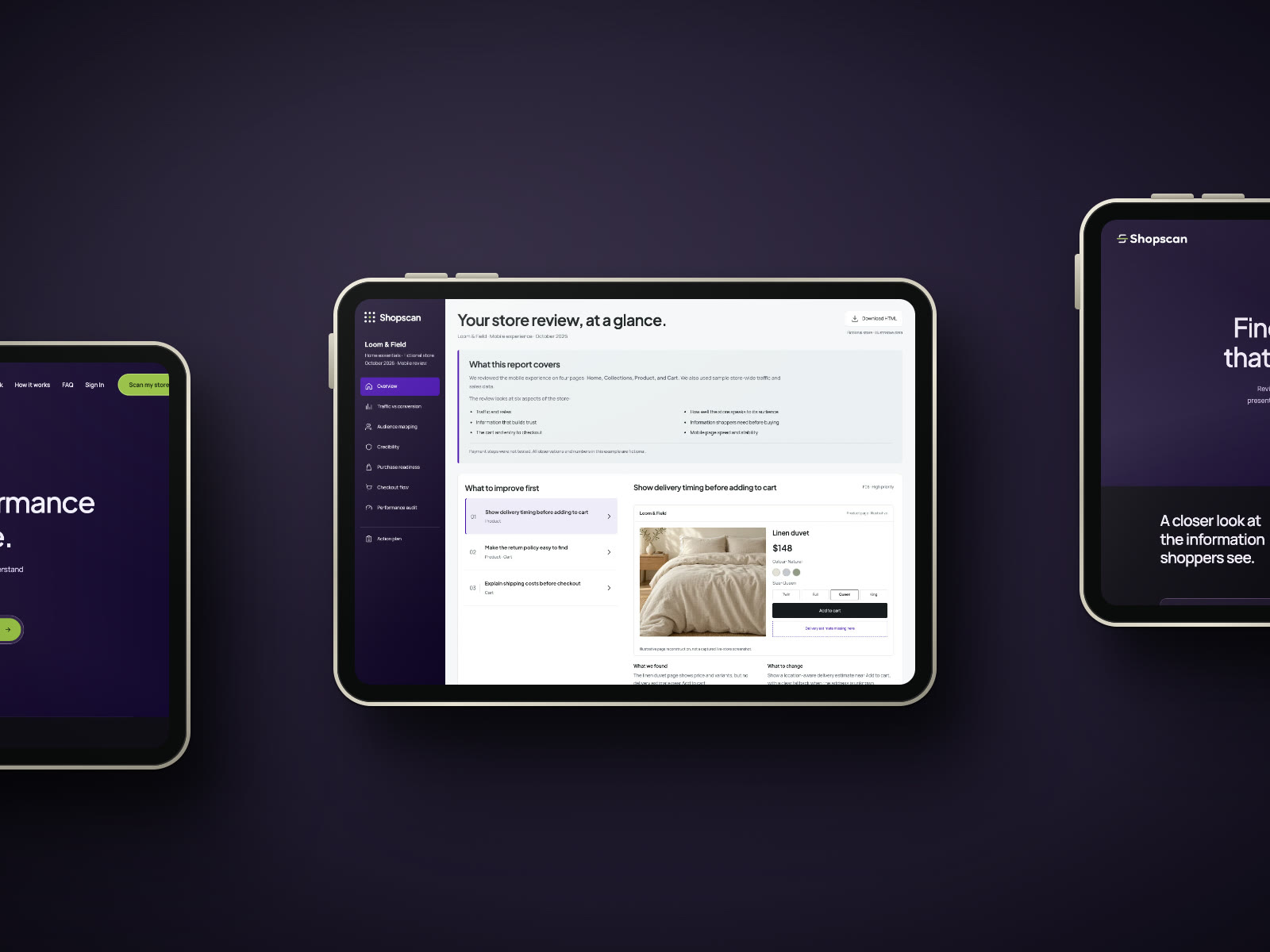
A new credibility-focused direction for an existing scanning platform. These designs were selected on 17 October 2026; the first release is in build. Report previews use a fictional store and illustrative data. Sales impact has not yet been measured.
ShopScan scans a Shopify store and turns what it finds into a short list of changes. The scanning platform already existed; Aneetta took on its new direction: a credibility review that shows owners their store the way a shopper sees it. Aneetta designed the checklist, the report and the landing page, and built the audit tools that made the checklist honest.
ShopScan already scanned stores and returned technical page-speed scores, like LCP, CLS and TBT: the metrics developers use to measure how fast a page loads.
The people reading them are store owners with little audit experience. They don't speak that language, and a number doesn't say which page to fix or what to do about it.
So the report needed a new job: show the store the way a shopper sees it, and turn that into a short list of changes.
A score tells you something is wrong. Not what to change.
Owners and the agencies that help them.
Founders with little audit experience. They want to know what works, what needs attention, and which change to make on which page.
They scan a client's store and bring the findings to a conversation with the owner. Same checks, same report.
Owners don't need a score.
They need to see their store the way a shopper does.
A checklist first, then tools to test it.
Aneetta wrote a credibility checklist and mapped every check to the pages it applies to: policies, who is behind the store, contact channels, reviews, how the store looks and product copy. It grew to 32 checks across six groups.
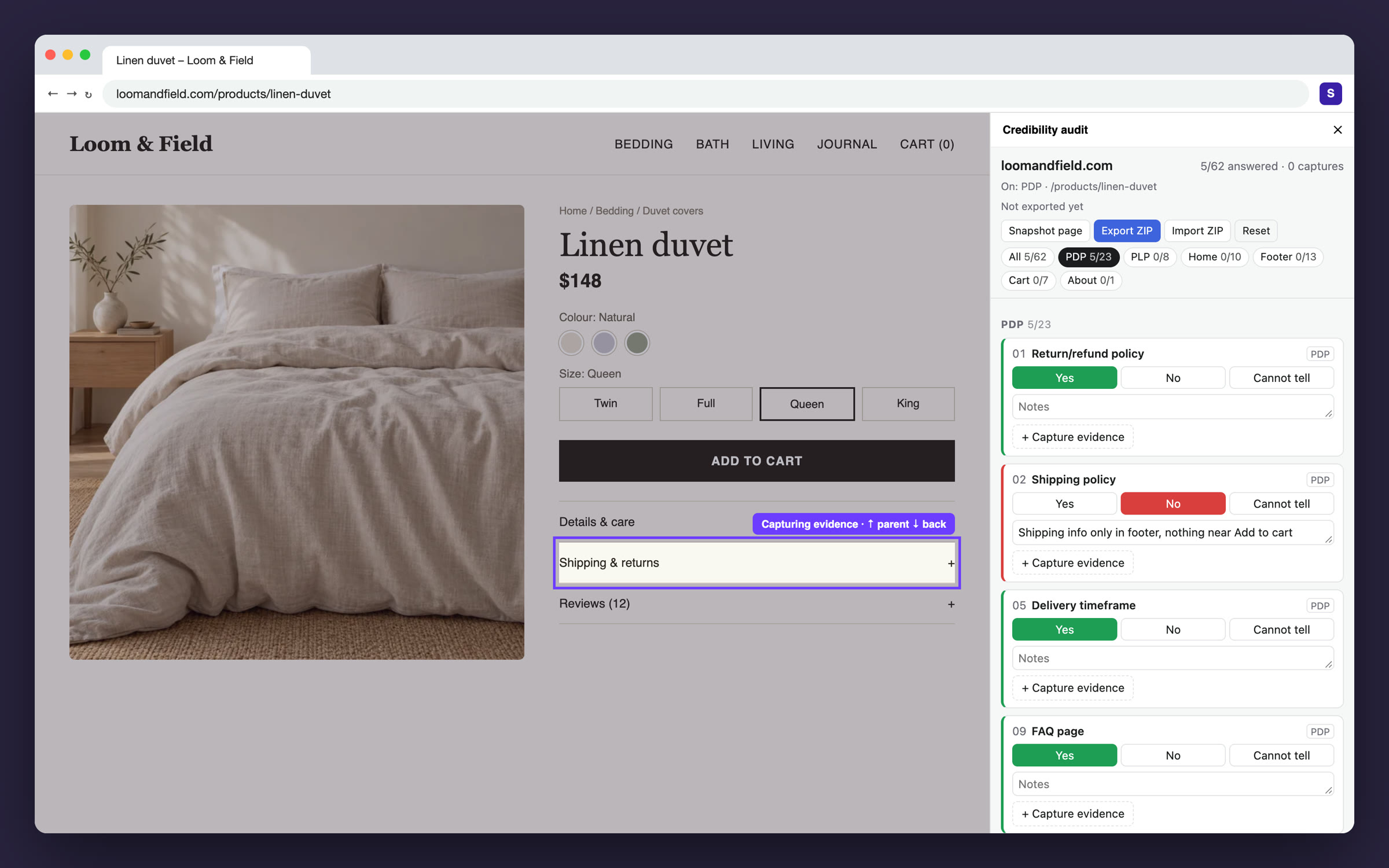
To make sure the checks were real, not just plausible, Aneetta built her own audit tools: a Chrome extension for reviewing a store page by page, and an automated tool that visits a store, snapshots every page and translates non-English stores. Then Aneetta re-audited 5 live stores with them.
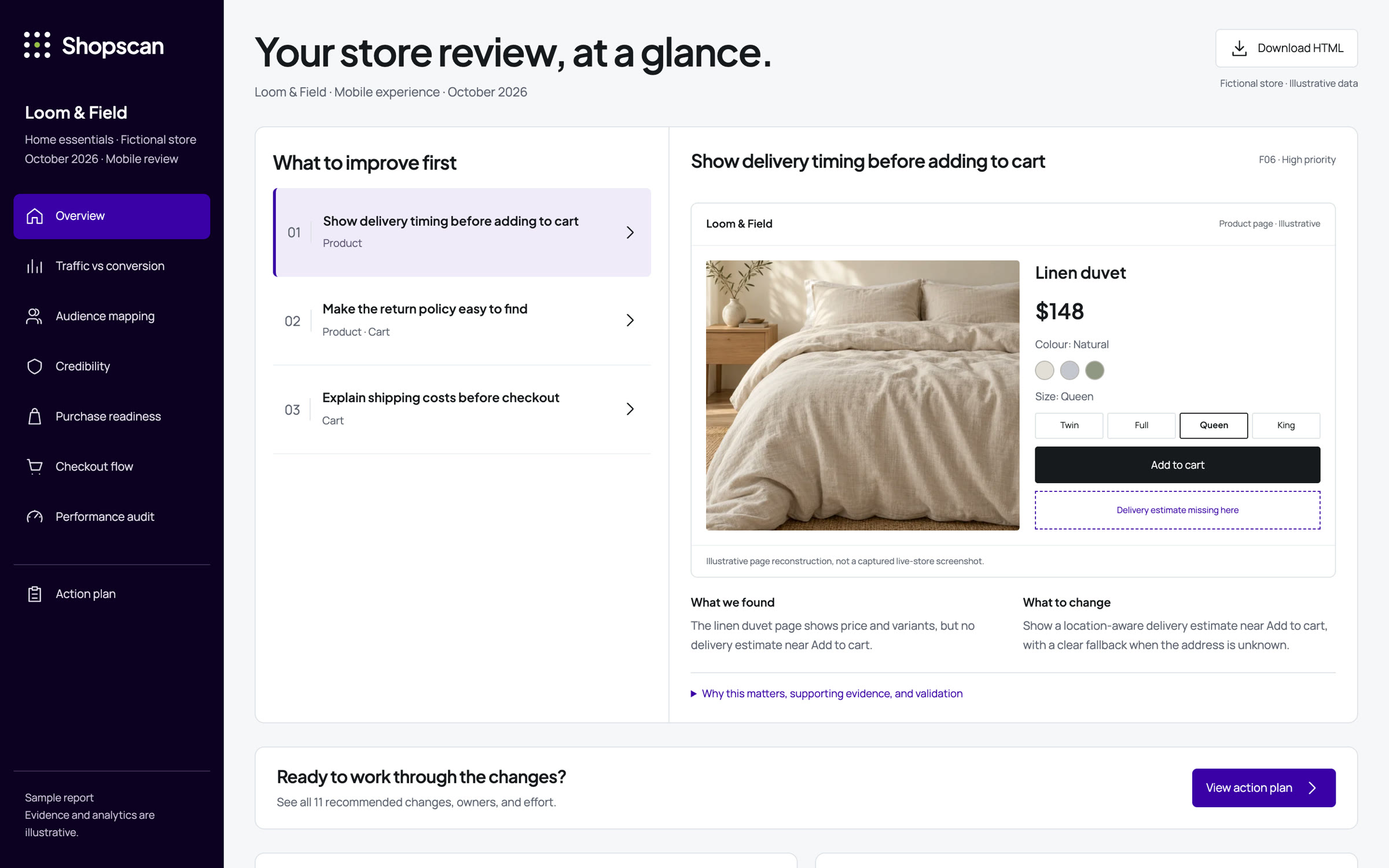
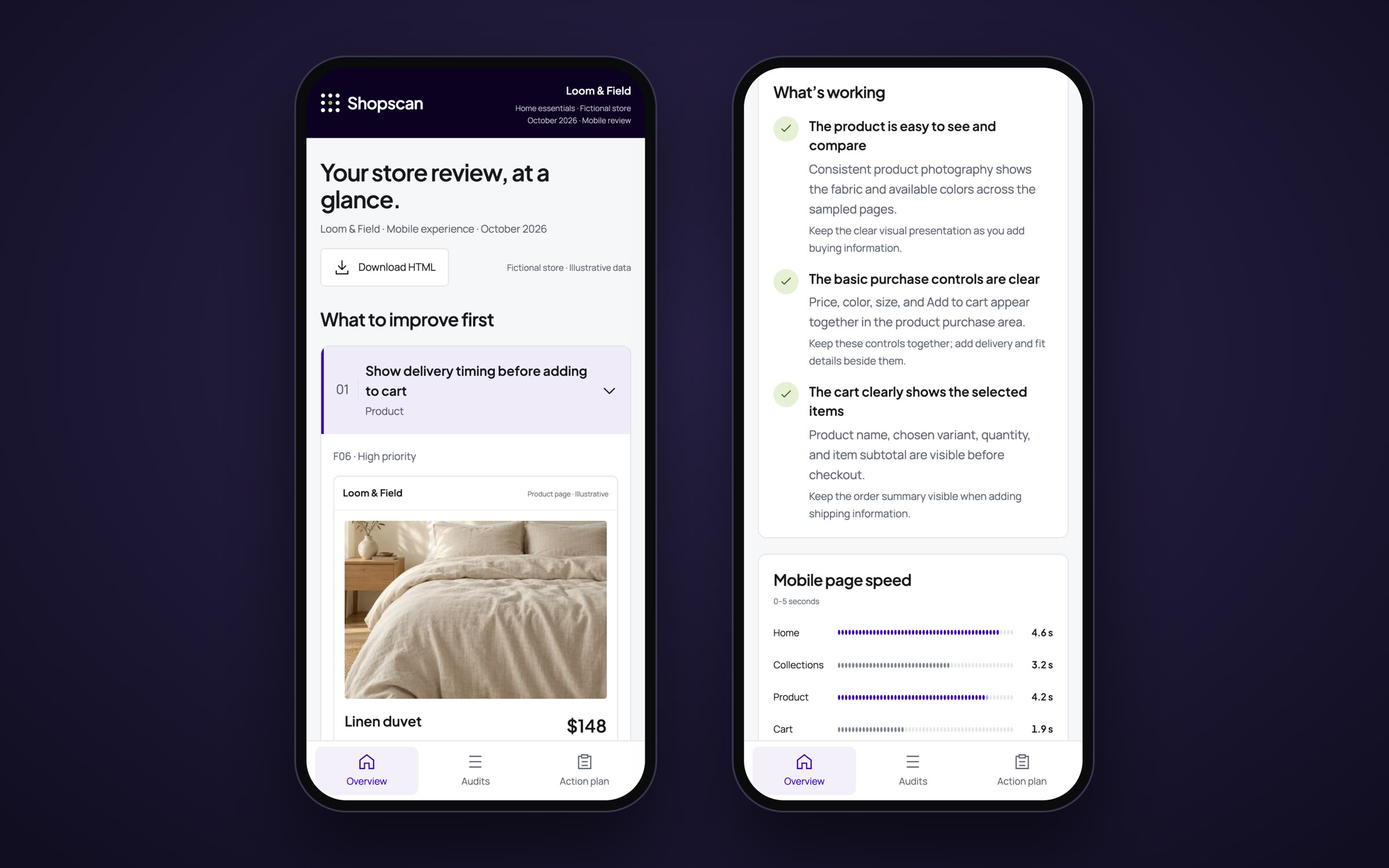
Less report, more direction.
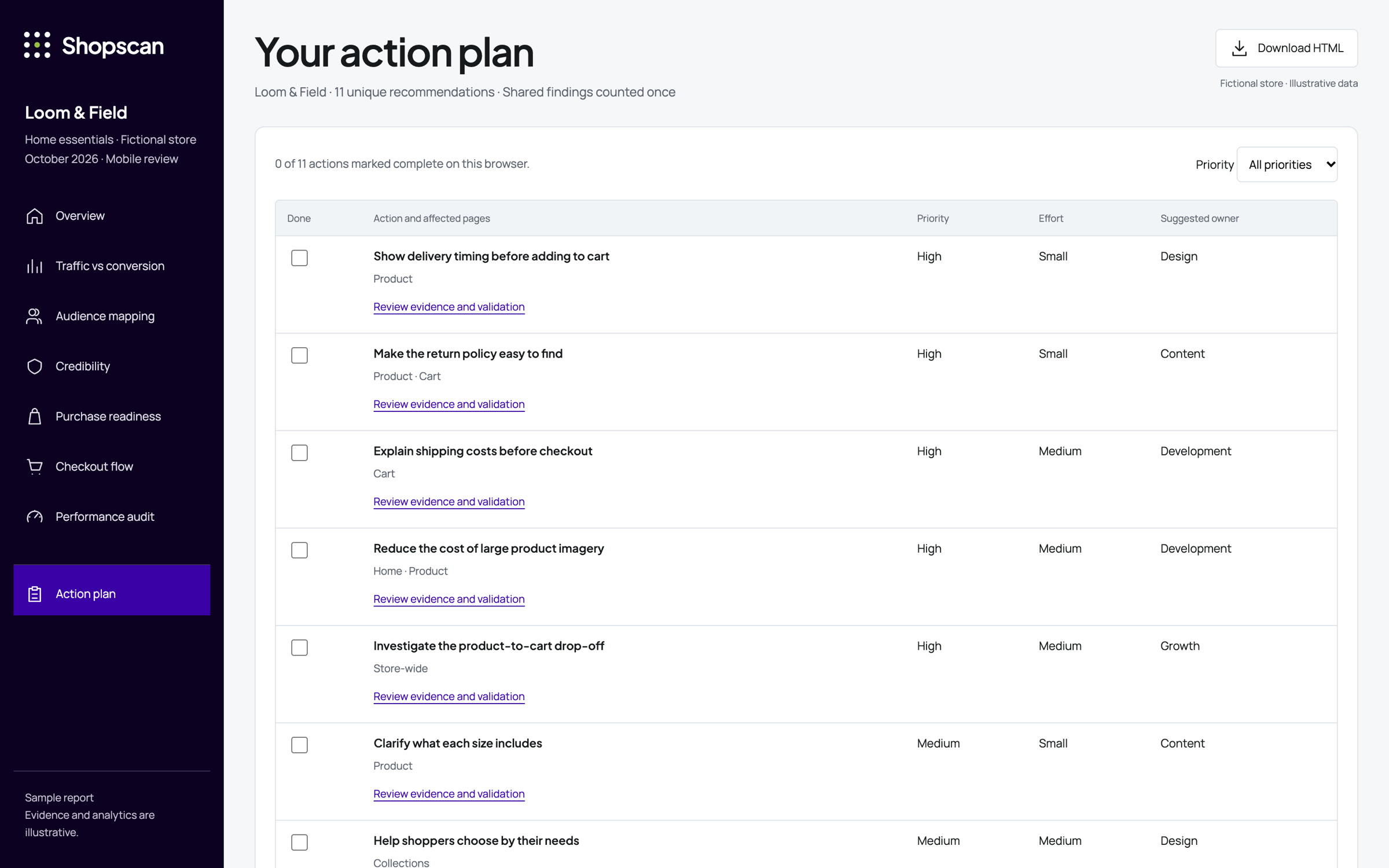
No priorities to piece together from different sections. Each finding names the page, shows the evidence, and says what to do.
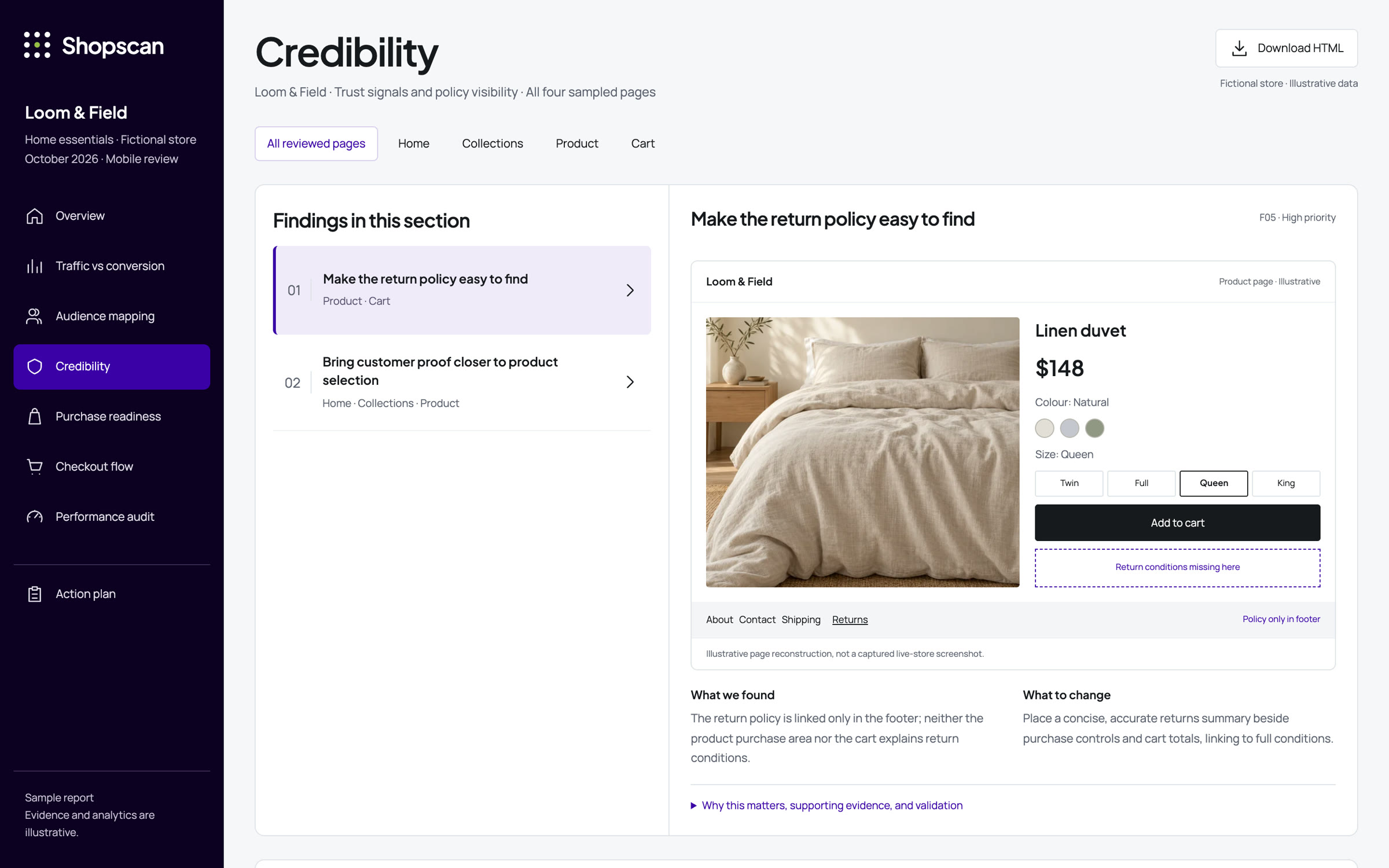
A finding is explained with the actual page and where the missing information should be, not with a number to decode.
The prototype had six categories. The first release ships two, credibility and performance, in one report with one action plan. The rest waits.
A store owner / agency toggle on the landing page becomes two pages with the same design, so each audience reads its own story.
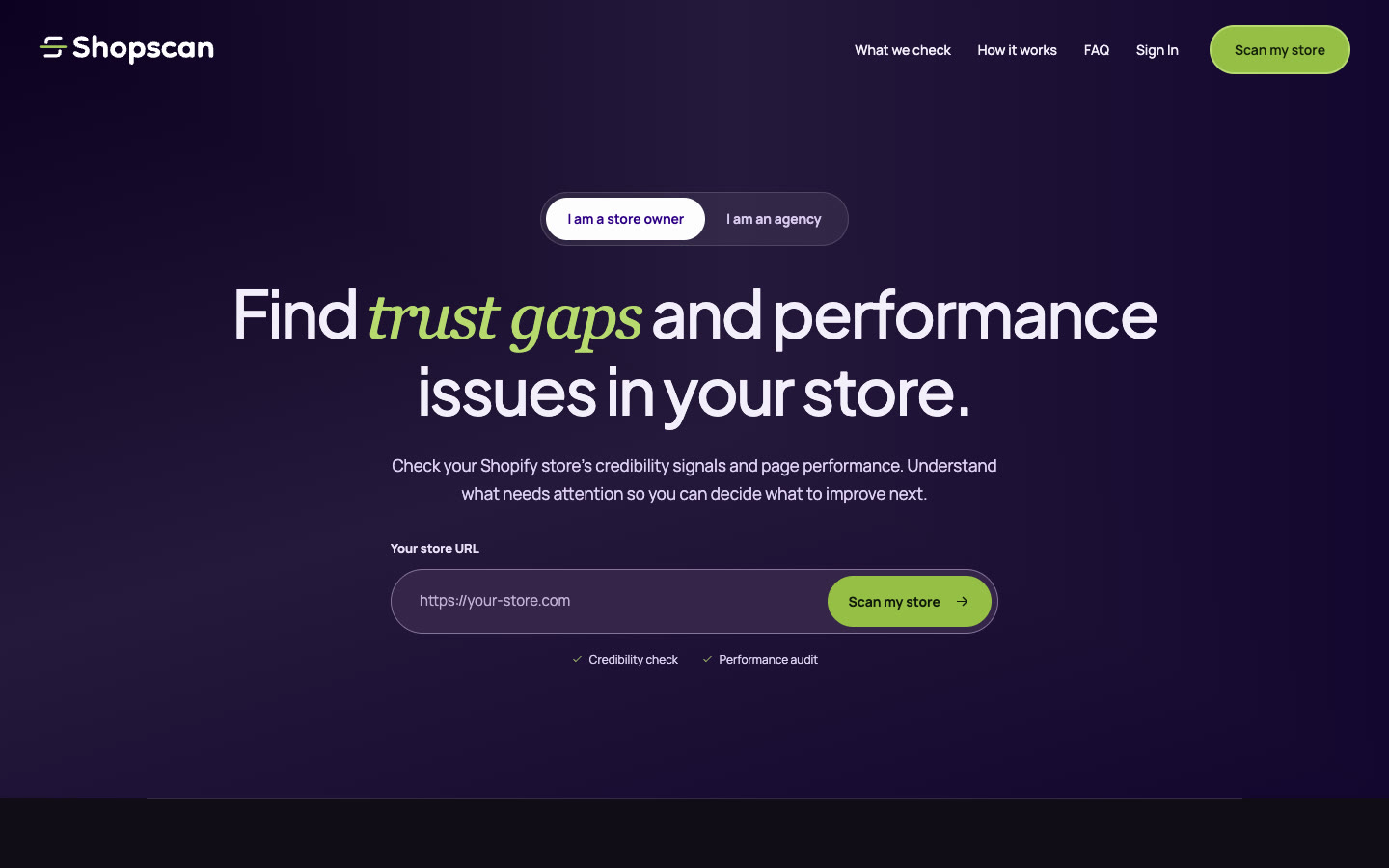
Three steps for the owner.
One field. No account needed to start.

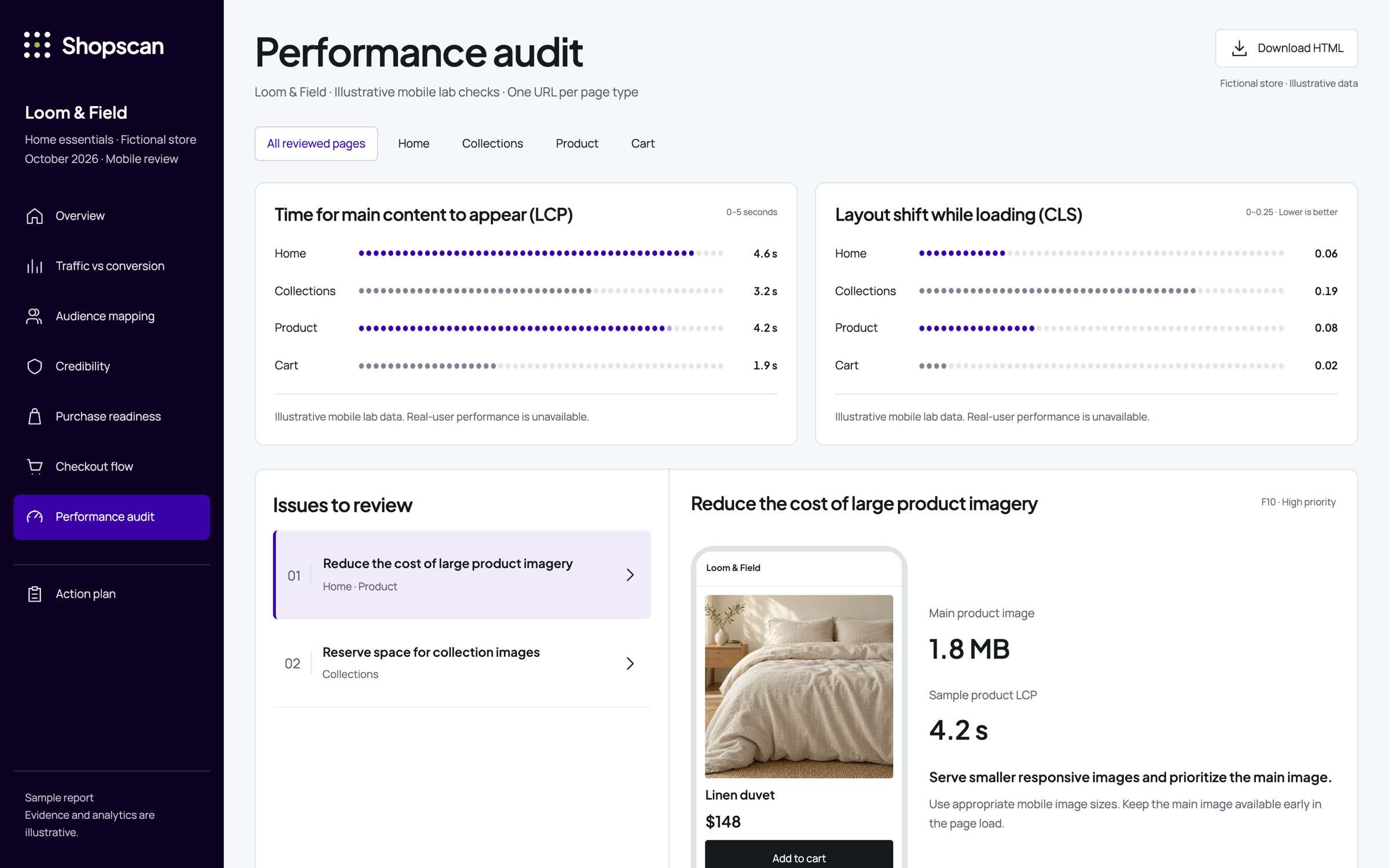
Credibility and performance, page by page.

Each finding: the page, the evidence, one action.

Report and landing.
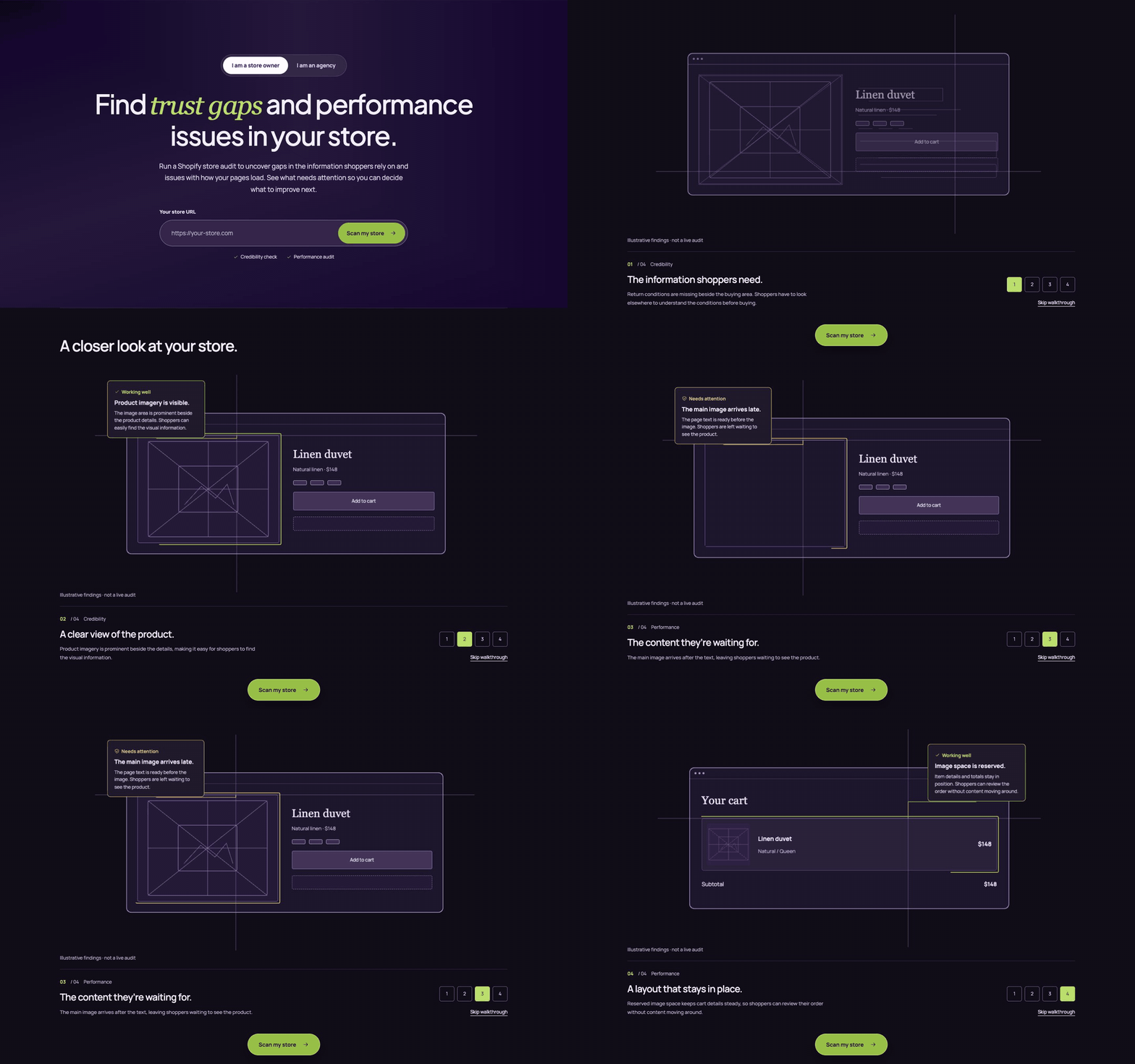
Aneetta built the tools that made the checklist honest.
Chosen, scoped, in build.
The landing page and report designs were picked for the first release on 17 October 2026, and the scope was cut to two checks. It's being built now.
The project has not yet demonstrated increased sales, so no sales-lift claim is made. Measurement will follow launch.
Writing the audit tools showed which checks were reliable and which only sounded good.
Re-auditing 5 live stores changed the checklist more than any brainstorm.
Shipping two clear checks beats six half-explained ones.
Design by Aneetta Davis. Adapted from the original project case study; contribution details retain the documented scope.
The development case study is being prepared. Implementation details and development contributions will be added here.